Skip to content
cap-impactFrançais

What we do · Training

Training on demand, for NGOs and research centers

Advocacy, negotiation, public speaking and media training, designed around your team, your issues and the people you need to convince.

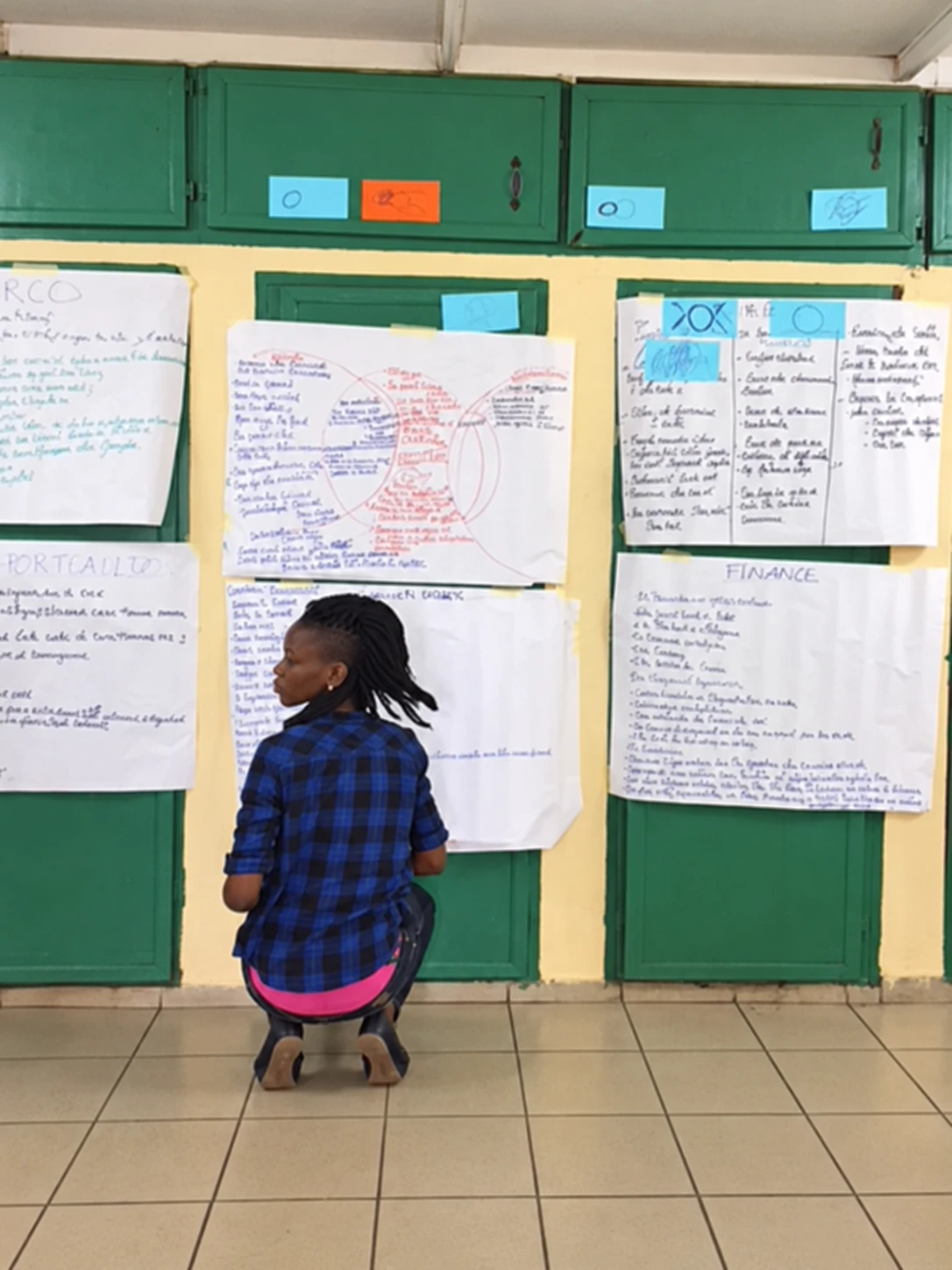
A workshop participant crouches in front of a wall covered in handwritten flipchart sheets.
Participatory strategy workshop, Cameroon.

More than 300 professionals trained since 2016, in Europe and Africa. NGO teams need to advocate and negotiate with decision-makers who do not share their priorities. Researchers need their findings to reach the people who can use them, in formats practitioners can act on. Both are skills, and both can be learned.

Every training is led by Marine Gauthier and built on her own practice: years of advocacy and negotiation alongside civil society, and a research career that knows what it takes for a finding to change a decision.

300+

professionals trained in advocacy, negotiation and public speaking

Who it is for

NGOs and civil society organizations

Build an advocacy strategy, prepare a negotiation, hold your ground in front of a minister, a donor or a company. Training starts from your current campaigns and the real people you face.

Researchers and research centers

Turn findings into influence: define the change your research can support, map who decides, write policy briefs and advocacy notes practitioners can use, plan a publication and media strategy, and speak about your work with confidence.

Four trainings

Each runs over two days and can be shortened, split into modules or combined. Content is adjusted to each group after a needs assessment.

Advocacy tools and strategies

Plan and run an advocacy strategy, step by step.

Objectives

  • Understand what advocacy is, its tools and techniques
  • Use planning methods for political action by civil society and research organizations
  • Identify the issues and analyze the context
  • Set strategic objectives and priorities
  • Write clear messages and choose the right channels
  • Assess the impact of your advocacy

Programme

Day 1 · Analyze

  • What is advocacy?
  • Module 1: Define the change you want
  • Module 2: Identify and analyze the issues

Day 2 · Prepare

  • Module 3: Set objectives and priorities
  • Module 4: Write messages, identify channels
  • Conclusion: assess your impact

Tools

  • Theory of change
  • PESTEL analysis
  • Stakeholder mapping and targeting
  • Strategic argument framework
  • Message builder
  • Advocacy brief

Negotiation strategies

Convince, hold your ground and build over time.

Objectives

  • Use voice and body to negotiate with confidence
  • Build a clear message and arguments adapted to the other side
  • Distinguish positions from interests (Harvard model)
  • Prepare and lead a negotiation from a position of unequal power
  • Manage emotions and destabilization tactics in real time
  • Build lasting cooperation after the negotiation

Programme

Day 1 · Position yourself and prepare

  • Module 1: Self-image, listening to the other side
  • Module 2: Build a message and an argument

Day 2 · Convince, hold and build

  • Module 3: Before the negotiation
  • Module 4: During the negotiation
  • Full role-play simulation and structured debrief
  • Module 5: After the negotiation

Tools

  • Persona
  • SMART objectives
  • Active listening
  • Zone of possible agreement
  • DESC method
  • Concessions matrix
  • Plan B / BATNA
  • The 4Cs
  • Role plays

Public speaking

Find your voice. Hold your place.

Objectives

  • Use voice and body to speak with confidence
  • Move past impostor syndrome and assert your legitimacy
  • Build and deliver a clear message adapted to your audience
  • Tell a story that engages and convinces
  • Improvise and handle difficult situations calmly
  • Leave with concrete tools you can reuse every day

Programme

Day 1 · Find yourself

  • Module 1: The body first: posture, grounding, presence
  • Module 2: Legitimacy: “Who am I to speak?”
  • Module 3: Build your message
  • Module 4: Embody a story

Day 2 · Face others

  • Module 5: Improvise with others
  • Module 6: Handle difficult situations: hostile questions, silence, tension
  • Module 7: The supportive arena: full practice in front of the group, collective debrief

Tools

  • Voice and body work
  • Theater exercises
  • Storytelling
  • Role plays
  • Real situations brought by participants

Media training

Get your message into the news, and stay in control of the interview.

Objectives

  • Understand why a media strategy matters and what journalists need
  • Define a media message: objective, angle, message and evidence
  • Build a press list and lasting relations with journalists
  • Write a press release and an op-ed
  • Prepare a media appearance
  • Stay in control of an interview

Programme

Day 1 · Your message

  • Introduction: why develop a media strategy?
  • Module 1: Define your media message
  • Module 2: Develop press relations

Day 2 · Your appearance

  • Module 3: Prepare your media appearance
  • Module 4: Control the interview

Tools

  • Media objectives
  • Angle and hook
  • Press list
  • Press release template
  • Op-ed
  • Interview simulations

How we train

  1. Tailored

    Content is refined with the commissioning organization and the participants, through a questionnaire and, where possible, preliminary interviews.

  2. Participatory

    Short informative sessions alternate with practical ones. Participants question the concepts and apply them in group exercises.

  3. Concrete

    Simple tools that participants can reuse as soon as the training ends, tested on their own cases rather than textbook ones.

  4. Applied

    Participants work on their own strategy, message or negotiation during the training, and leave with a booklet of tools and exercises.

  5. Evaluated

    Questionnaires at the start and the end measure what was learned. An anonymous evaluation follows, and a nine-month follow-up grid is available.

Practical details

Format
In person or remote, from half a day to three days of delivery
Languages
French or English
Group
Small groups, so that everyone practices
Materials
Booklet of tools and exercises, certificate of participation

Recent training assignments

  • Communicating for change on climate change adaptationUNDP, 2023
  • Advocacy writingCIDSE, 2023
  • Advocacy writing for researchersUniversité Libre de Bruxelles, 2022
  • Influence communicationIUCN France, 2022
  • Negotiation capacity of REDD+ partners on forest governance in Central AfricaRainforest Foundation Norway, 2012-2020
  • Advocacy tools and strategy for HIV organizations in Congo, Cameroon and Côte d'IvoireSidaction, 2018
  • Advocacy, negotiation and public speaking for staff, over an eight-year partnershipAFEV

What participants say

“The trainer was professional and dynamic, and adapted herself perfectly to our requests, as well as to the needs, and political and cultural contexts, of each partner. Based on numerous examples and tools, the training was adapted to all experience levels and made concepts frequently considered abstract clear and practical.”

Anaïs Saint-Gal, Advocacy Officer, Sidaction

“A participatory training with clearly explained modules and a good atmosphere. It gave me a clear view of influence strategies. The trainer knew her subject and conveyed it well.”

Researcher

“The training was very useful and exceeded my expectations. The atmosphere and the method helped us acquire knowledge and skills and take ownership of the tools. We will put them into practice.”

Research Officer, FIAN

“Thanks to this training, I gained confidence. It was very useful and exceeded my expectations. The atmosphere and the method helped me make the tools my own and feel at ease.”

Human rights defender, Alternatives-Cameroun

Planning a training for your team?

Tell us who the participants are, what they need to achieve and by when. We reply within two working days with a proposed program.

Request a training