Insights
Our analysis does not stop at mission reports
Derrière le climat, the podcast
A French-language podcast on the social consequences of international climate policy, rooted first in the global Souths. First season from January 2027, two episodes a month: one analysis, one interview.
Behind every instrument (a conservation mechanism, an adaptation fund, a community consultation, a climate finance flow), there are people whose lives change. The podcast follows that: who decides, who gains, who loses, and what these mechanisms produce once they leave the negotiating room. It is not science communication, it is not activism, and it does not chase the news cycle.
Climate Justice Dispatch, the newsletter
A newsletter on climate justice and the blind spots of international aid, written by Marine Gauthier. The register is freer than a report, deliberately so: some things are better said outside institutional formats.
- Some People Don't Care About “The Climate”: why climate abstraction mobilizes less than what people can see.
- The Population Panic Is Back (and It's Climate-Washed): the quiet return of population control in climate policy and climate funding.
- Renting the Past With Public Money: snow cannons, sea walls, air conditioning, the strange politics of adapting without changing anything.
- The Revolutionary Act of Shutting Up: what stakeholder consultation has in common with the lost art of staying quiet.
- Solidarity Without Applause: on how the Global North keeps confusing accountability with ingratitude, and solidarity with being liked.
Publications
Research
Operationalizing epistemic justice: Participatory 3D Modelling in conservation practice
Academia Environmental Sciences and Sustainability, 2025 · peer-reviewed article
What participatory three-dimensional modeling actually delivers in terms of epistemic justice, based on a pilot exercise in the Itombwe Nature Reserve and four years of follow-up.
Re-territorializing Climate Governance: the REDD+ Initiatives in the DR Congo
Fourth World Journal, 2025
A political ethnography of Mai-Ndombe: a critique of climate governance that privileges international voices over those of forest-dependent peoples.
Reports
Beyond Commitments: how can NDCs contribute to forest governance and resilient local communities?
Fern · English and French
A study carried out with partner organizations in Cameroon, the Central African Republic, Ghana, Liberia, the DRC and the Republic of Congo, and presented at national workshops before publication.
Civil society brought together for REDD+ in the Democratic Republic of the Congo
UNDP and Rainforest Foundation Norway · lessons learned 2009-2015
An analysis of how civil society and Indigenous peoples were engaged and structured within the national REDD+ process.
Green book on participatory 3D modeling, Itombwe Nature Reserve
Rainforest Foundation Norway, 2016 · English and French
The three-dimensional model as a planning and management tool, built with the communities of Ilibo, Kigogo and Kitamba.
Mai-Ndombe: will the REDD+ laboratory benefit Indigenous peoples and local communities?
Rights and Resources Initiative, 2018 · cumulative impacts and risks
Seventy-five pages on the stacking of REDD+ initiatives in a single province, and what it produces for the people who live there.
Mpenzele: communities in charge of sustainable forest management
Rainforest Foundation Norway, 2020 · green book on participatory approaches
A project steered by communities, the difficulties encountered and the responses put in place.
What do local communities teach us about forest management? 2005-2015
Réseau Ressources Naturelles · English and French
Ten years of participatory mapping experience in the Democratic Republic of the Congo.
Reserved! Atlas and articles on Indigenous peoples facing nature conservation
With Riccardo Pravettoni · supported by the European Journalism Centre
A world tour of Indigenous peoples and protected areas, in maps and reportage.
Press and commentary
- Colonial Bureaucracy and Contemporary Citizenship: Legacies of Race and Emergency in the Former British Empire, Allegra Laboratory, September 2025
- COP après COP, les peuples autochtones sont de plus en plus visibles mais toujours inaudibles, The Conversation, November 5, 2025 (in French)
- Tourism starting to bleed the Lickan Antay people of the Atacama desert dry, The Guardian, August 2016
- Clashing over conservation: saving Congo's forest and its Pygmies, The Guardian, August 2016
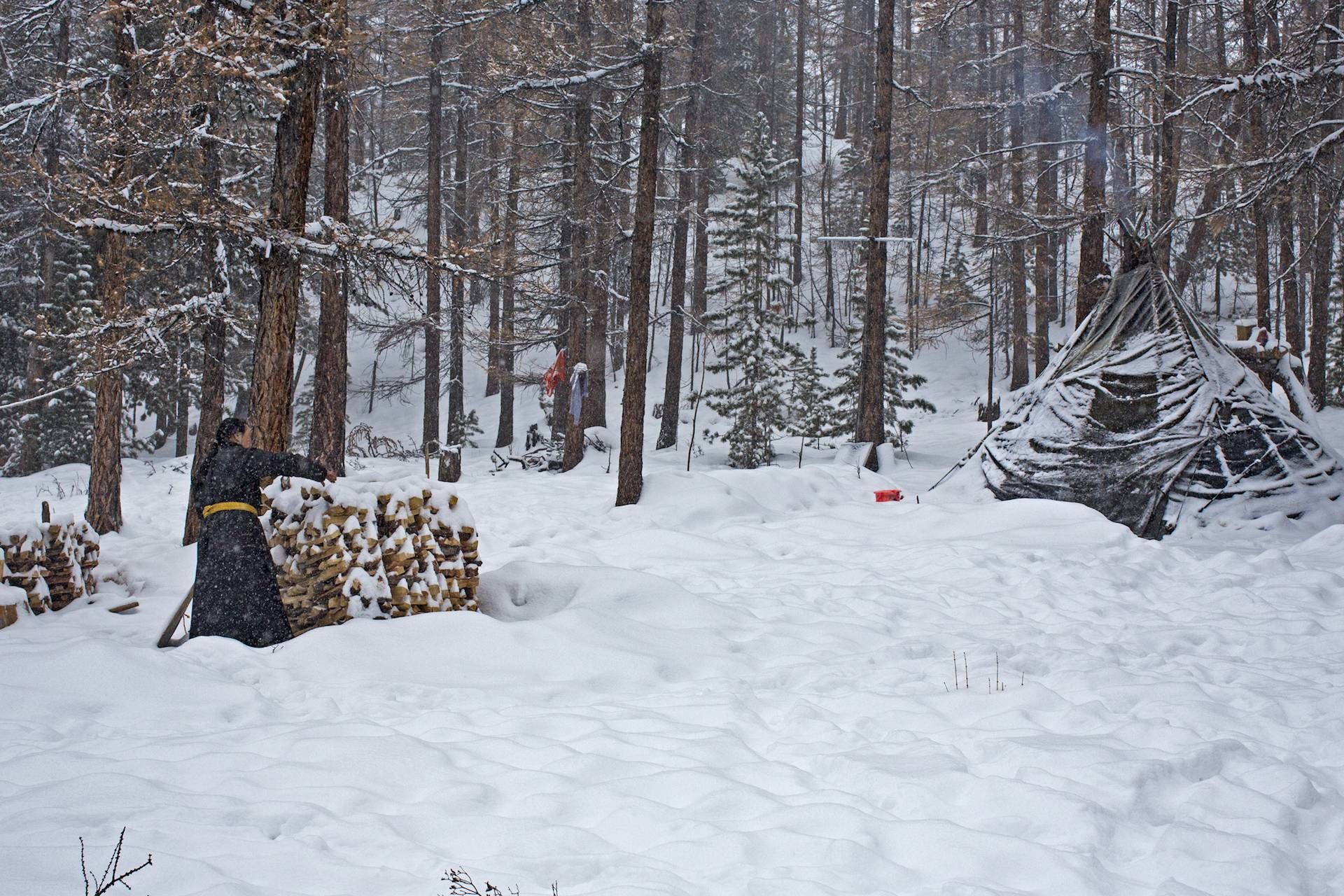
- 'We have nothing but our reindeer': conservation threatens ruination for Mongolia's Dukha, The Guardian, August 2016
Teaching
Marine Gauthier teaches environmental geopolitics at UCLy, Alpes Europe campus in Annecy: “Geopolitics of small powers” and “Empires and the Environment: an environmental history of empires, antiquity to the present”. She has taught international humanitarian law and human rights at the Sorbonne, and advocacy before global institutions at EFAP.