Approach
One thread, four moments
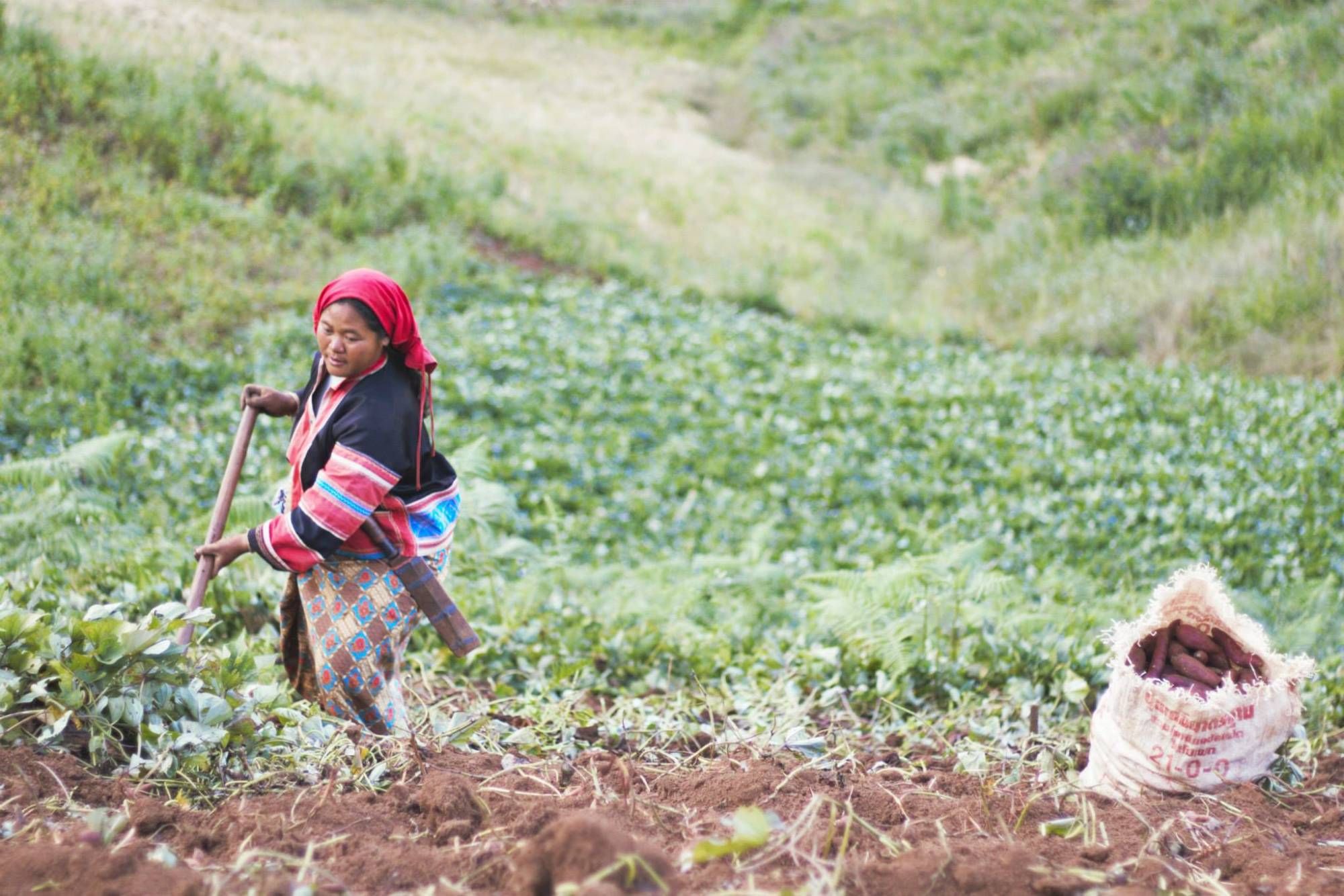
What climate and environmental action changes for the people living on the territories concerned, and what institutions do with that.
Where we come from
The practice was founded in 2016 as CAP!, Centre d’Accompagnement du Plaidoyer (Center for Advocacy Practices), on a simple premise: expertise in political influence should not be reserved for those who can afford it.
Ten years on, the record speaks. More than a million signatures gathered against glyphosate in six months. Three hundred professionals trained in advocacy and negotiation. Four hundred Congolese organizations brought into a single network around the REDD+ process. Decriminalizations won, rights recognized, funding unlocked.
In 2026 the practice became cap-impact and narrowed its terrain. The intersection of climate and human rights is where our work is most useful. Advocacy has not disappeared: it has become one use of a single competence, alongside safeguards and evaluation.
This is a narrowing of focus, not a change of trade.
One thread
Our work comes down to a single question: what climate and environmental action changes for the people living on the territories concerned, and what institutions do with that. We work on that question at every stage.
- Before the project, our safeguards expertise lets you anticipate.
- During implementation, we make partnership and direct funding workable.
- At mid-term and at the end of a program, evaluation establishes what actually happened.
- Beyond the project, advocacy support carries those findings to decision-makers.
These are not four trades. It is one competence, exercised at different points in a program’s life.
Do no harm, and do better
Safeguards are not declared. They are built.
“Do no harm” is the phrase the sector has used for a long time, and it still holds. It protects people, and it protects the institution: a project that anticipates its effects on communities moves faster than one that discovers them halfway through.
“Do better” begins where compliance stops. It means moving decisions and resources toward the people who live on the territory, building accountability that runs both ways, and accepting that the result will be contested. It is more ambitious, it takes longer, and it is what separates a program that holds from a program that passes.
We work on both. The first is enforceable and verifiable. The second has to be built.
How we work
We start from the ground, then build the framework. A safeguard system tested with a community organization produces protection; the reverse produces paperwork.
We design requirements that can be met. The point is not more control. It is obligations a local organization can meet, and has an interest in meeting.
We say what we find. A frank evaluation is the only kind worth commissioning. Our clients know they will get our analysis, not their own reflection.
We assemble the team before we introduce it. Marine Gauthier leads every assignment. Complementary skills come from our network of senior consultants. You know who is involved, on what, and in what capacity before you sign.
We work in French and English, and with interpreters where the working language is neither.
Where we are most useful
We concentrate our work on the intersection of climate, human rights and safeguards, because that is where ten years of practice and fifteen years in the field make a measurable difference.
We leave to others carbon finance engineering, technical MRV and certification, environmental science, communications consulting and program coordination. That perimeter is a choice, and it is what makes the rest solid.
Our ground rules
Two things we would rather set out from the start.
We do not take funding or partnership advisory work with an organization whose program we are evaluating, for the duration of the evaluation and for twelve months afterward. Any pre-existing relationship is declared in writing before any proposal.
Marine Gauthier also writes, and produces a podcast, on the social consequences of international climate policy. That work is independent and at times critical of institutions that are also potential clients. Where an assignment concerns an organization or an instrument she has commented on publicly, she discloses it to the client before engaging. It is a guarantee of independence, and our clients know it before they sign.
The name
CAP is a name from 2016: Centre d’Accompagnement du Plaidoyer, the Center for Advocacy Practices. We kept the three letters because ten years of work sit behind them. The philosophy that shaped the 2026 repositioning is ubuntu, I am because we are. It says what we believe well enough: a program is worth what it produces for the people it touches, and an institution always gains by working with those it affects.